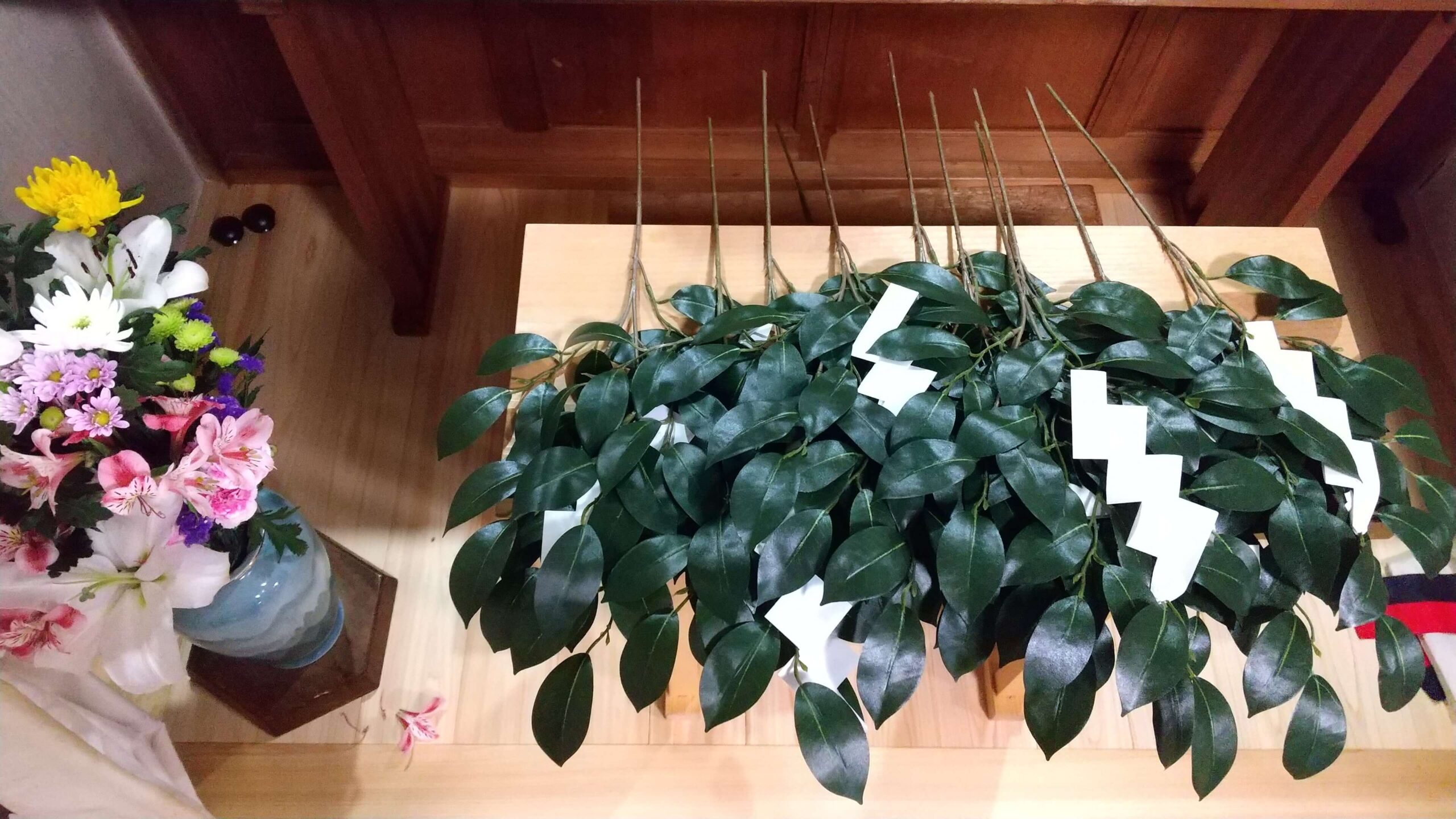
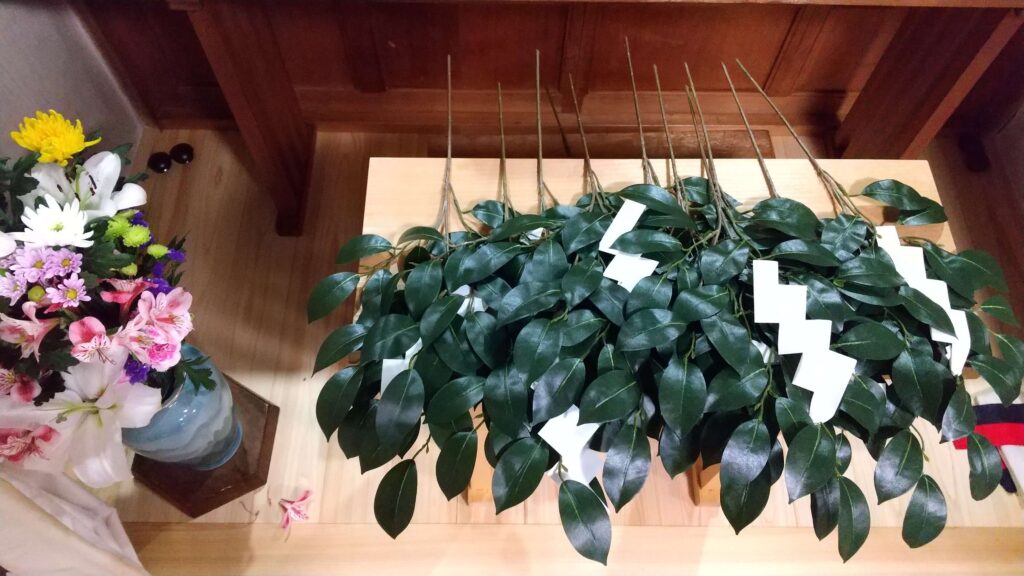
この日は祖父母が亡くなって三周忌。親戚で集まってお祈りをします。日本の家庭の多くは葬式など仏教式が主流ですが、クマたもの家庭は神道式です。寺ではなく神社でやるような榊(さかき)を置きます。さかきを持って一回転して置くなどの作法があります。いつもよくわからないままやっています。
Today marks the third anniversary of my grandparents’ deaths. Relatives gather to pray. While most Japanese families follow Buddhist customs for funerals and other ceremonies, my family follows Shinto customs. We place sakaki branches, like you would at a shrine, not a temple. There are specific rituals involved, such as spinning around once before placing the sakaki. I always do it without really understanding what I’m doing.
詳しく知りたい方はこちらの引用URLをどうぞ
For more details, please refer to the quoted URL below.
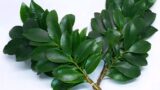
榊(さかき)が神事や神棚で使われる理由は、1年を通して青々とした葉を茂らせる生命力の強さから「神様が宿る依り代(よりしろ)」とされてきたためです。常緑であることから繁栄の象徴とされ、古事記の時代から神聖な植物として神と人を繋ぐ「境木」や「栄木」として崇められてきました。(Google AI要約)
The reason why the sakaki tree is used in Shinto rituals and on household altars is because its strong vitality, with lush green leaves remaining throughout the year, has led to it being considered a “yorishiro” (a vessel for a deity to reside in). Its evergreen nature has made it a symbol of prosperity, and since the time of the Kojiki (ancient Japanese chronicle), it has been revered as a sacred plant, a “boundary tree” or “tree of prosperity” connecting gods and humans. (Google AI summary)
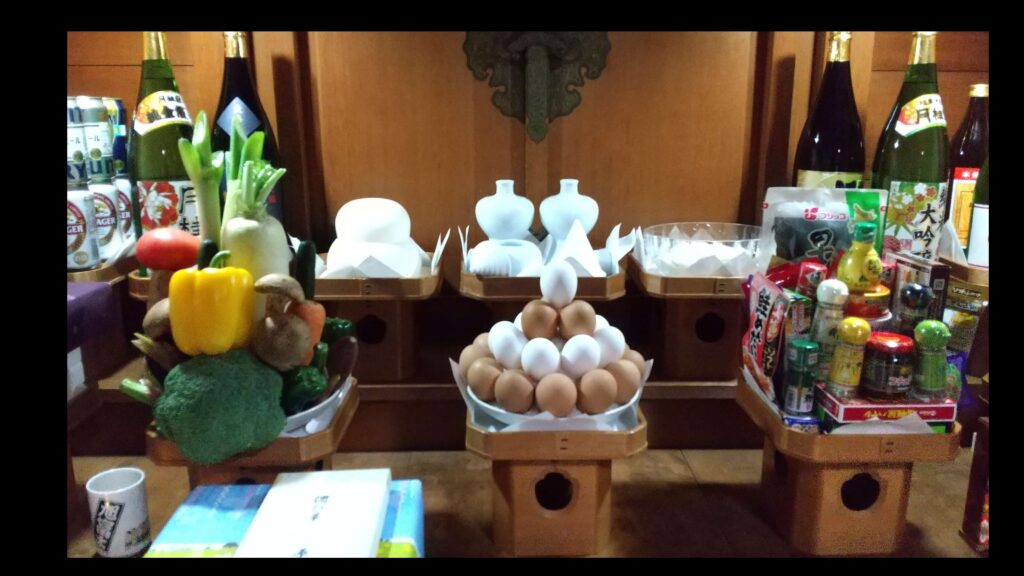
神道の教会にはたくさんのお供え物が神前にありました。芸術的な置き方で思わず写真を撮りました!そして、クマたもは思い出しました!我はお供え物と食べ物の権化であることを!食の神様に使えし者であった!、、、という設定で行きます〜
There were many offerings placed before the altar in the Shinto church. The artistic arrangement made me want to take a picture! And then Kumatamo remembered! I am the embodiment of offerings and food! I am a servant of the god of food! …I’ll go with that premise~
親戚で集まる楽しみはなんと言ってもごちそう!ごちそうです!世間話もそこそこにとにかく飯!以下飯テロで終わるので流し見どうぞ〜
The best part of getting together with relatives is definitely the food! The food is amazing! We barely need to chat, it’s all about the food! The following is going to be a food porn fest, so feel free to just skim through it!
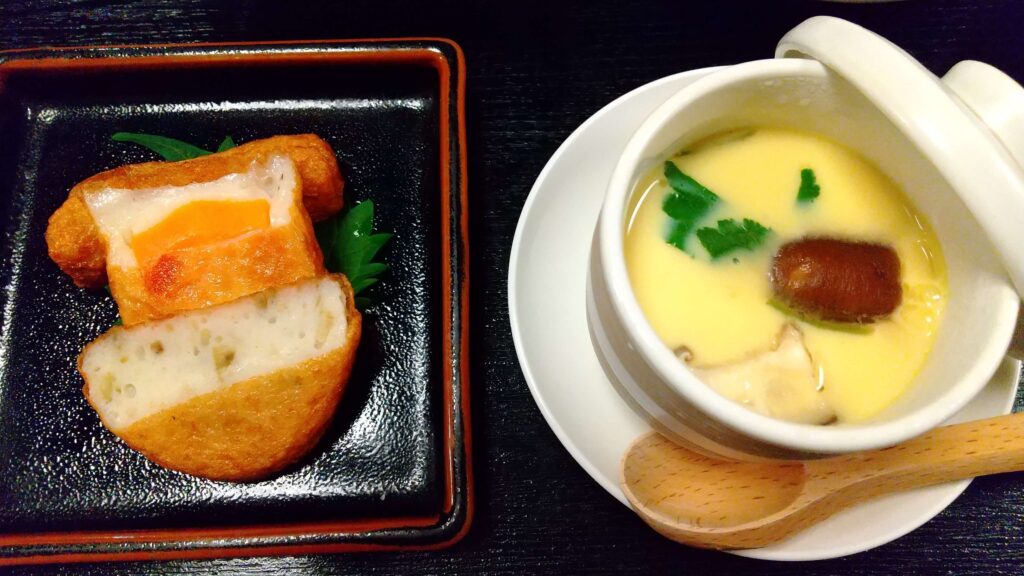
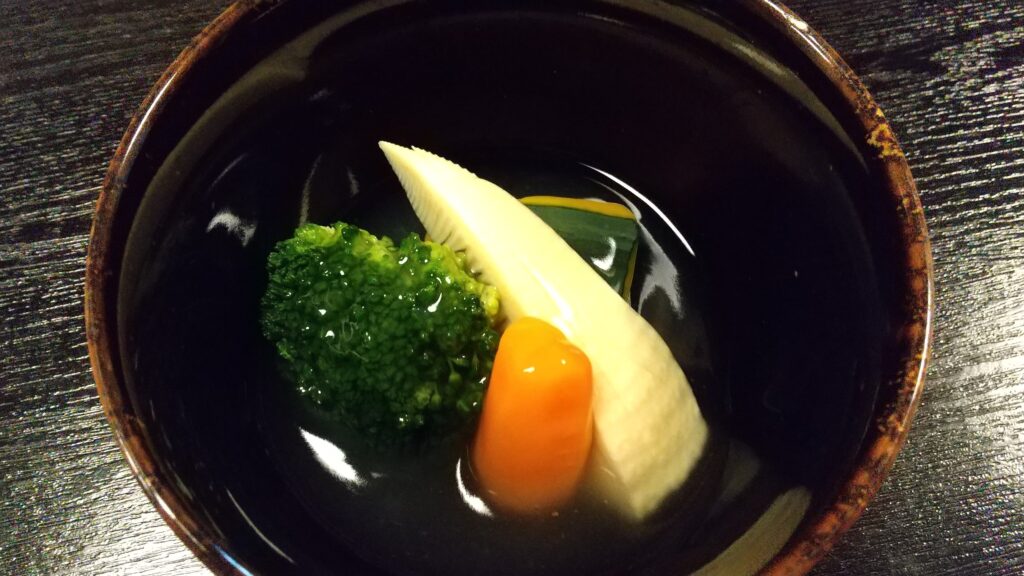
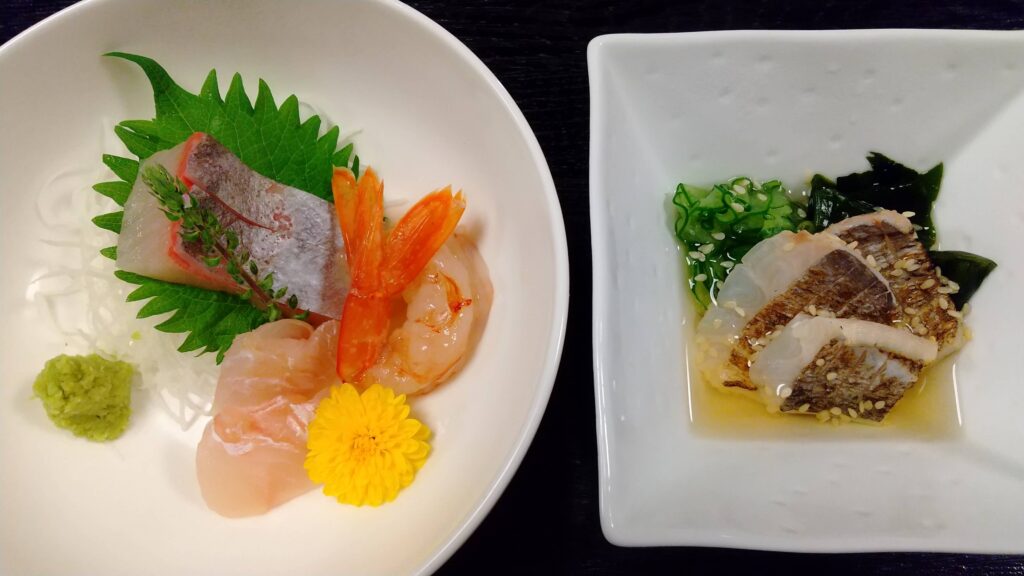
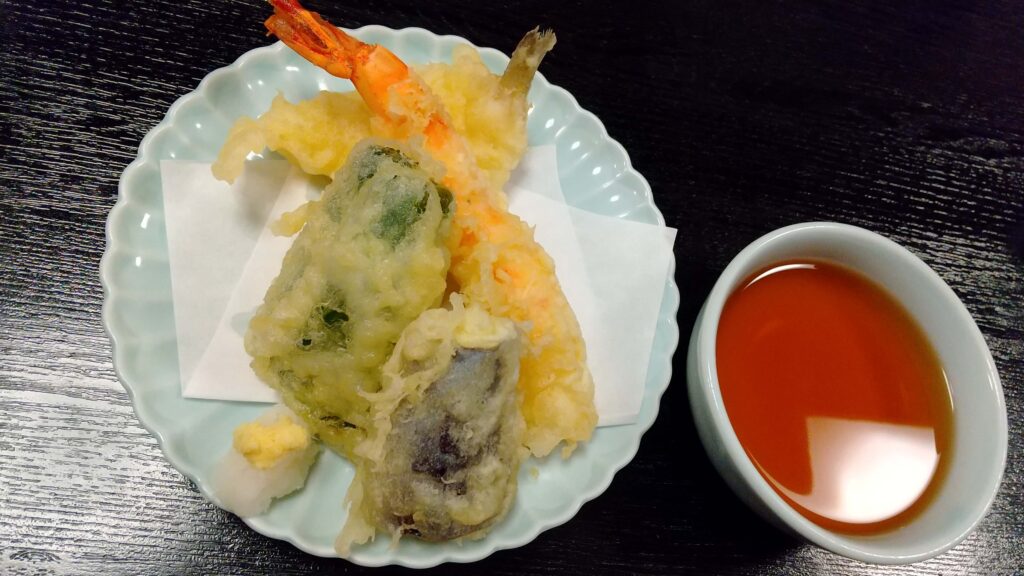
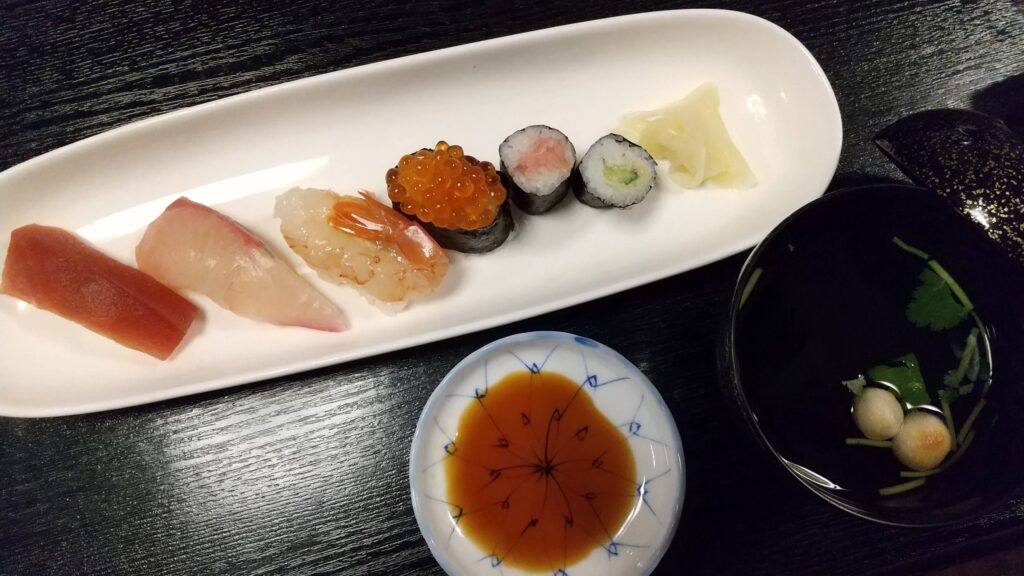
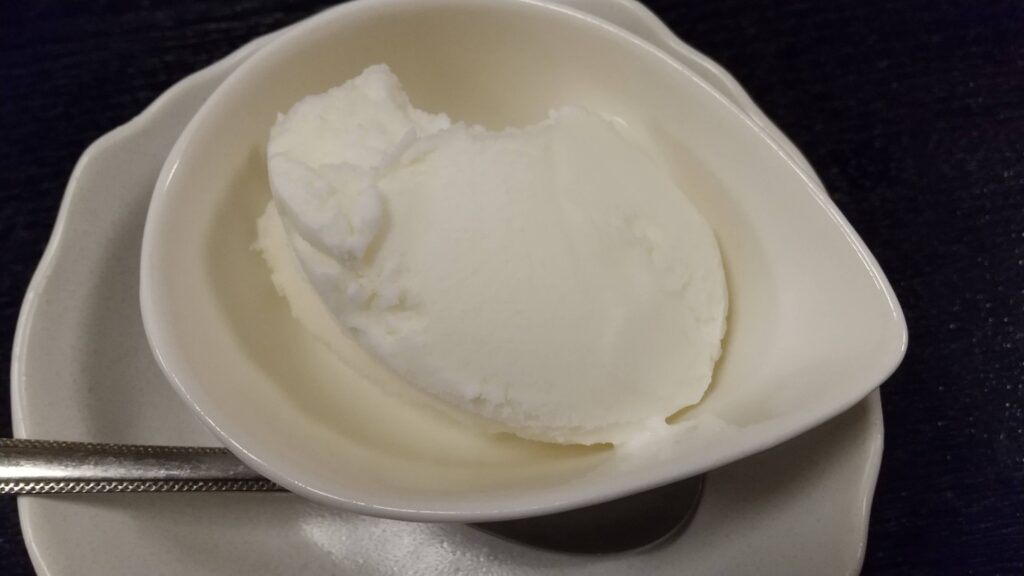
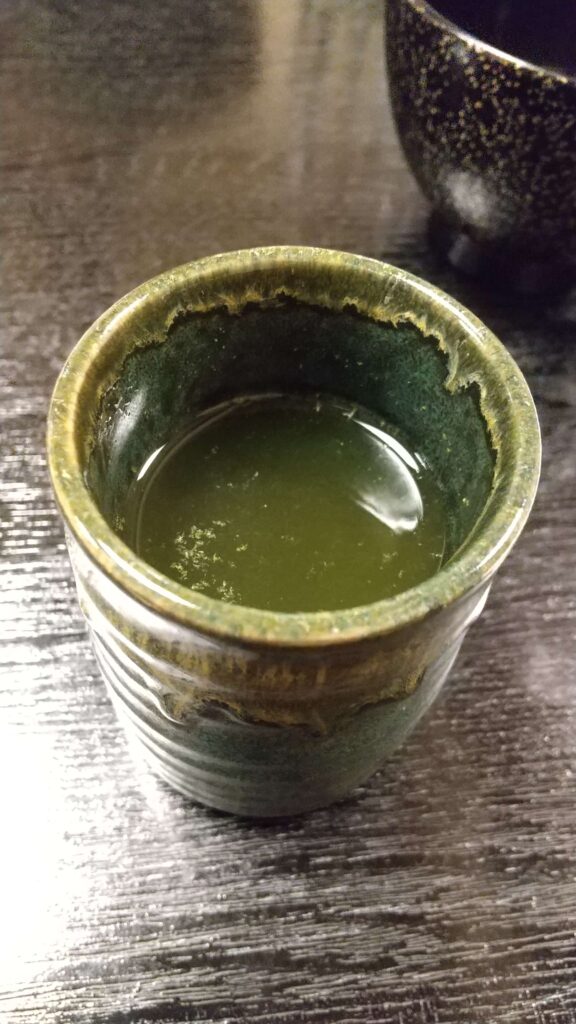
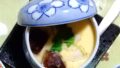
会席料理です。上からさつま揚げ、茶碗蒸し、筍のおひたし、刺身、酢の物、天ぷら、寿司、お吸い物、アイス、緑茶です。おかずは飲める人はお酒と一緒に、飲めない人はご飯と食べます。食後のお茶は無料で配ってくれるところが今は多いですが、今後の物価高次第では少なくなるかもしれません。
This is a kaiseki meal. From top to bottom, it consists of satsuma-age (fried fish cake), chawanmushi (steamed egg custard), tamenoshi (boiled bamboo shoots), sashimi, vinegared dishes, tempura, sushi, soup, ice cream, and green tea. Those who drink alcohol can enjoy the side dishes with their drinks, while those who don’t drink can eat them with rice. Many places now offer free tea after the meal, but this may become less common depending on future price increases.

今日も美味しいものをたくさん食べたね!ごちそうさまでした〜またね!
We ate lots of delicious food today! Thanks for the meal, see you next time!